)
)
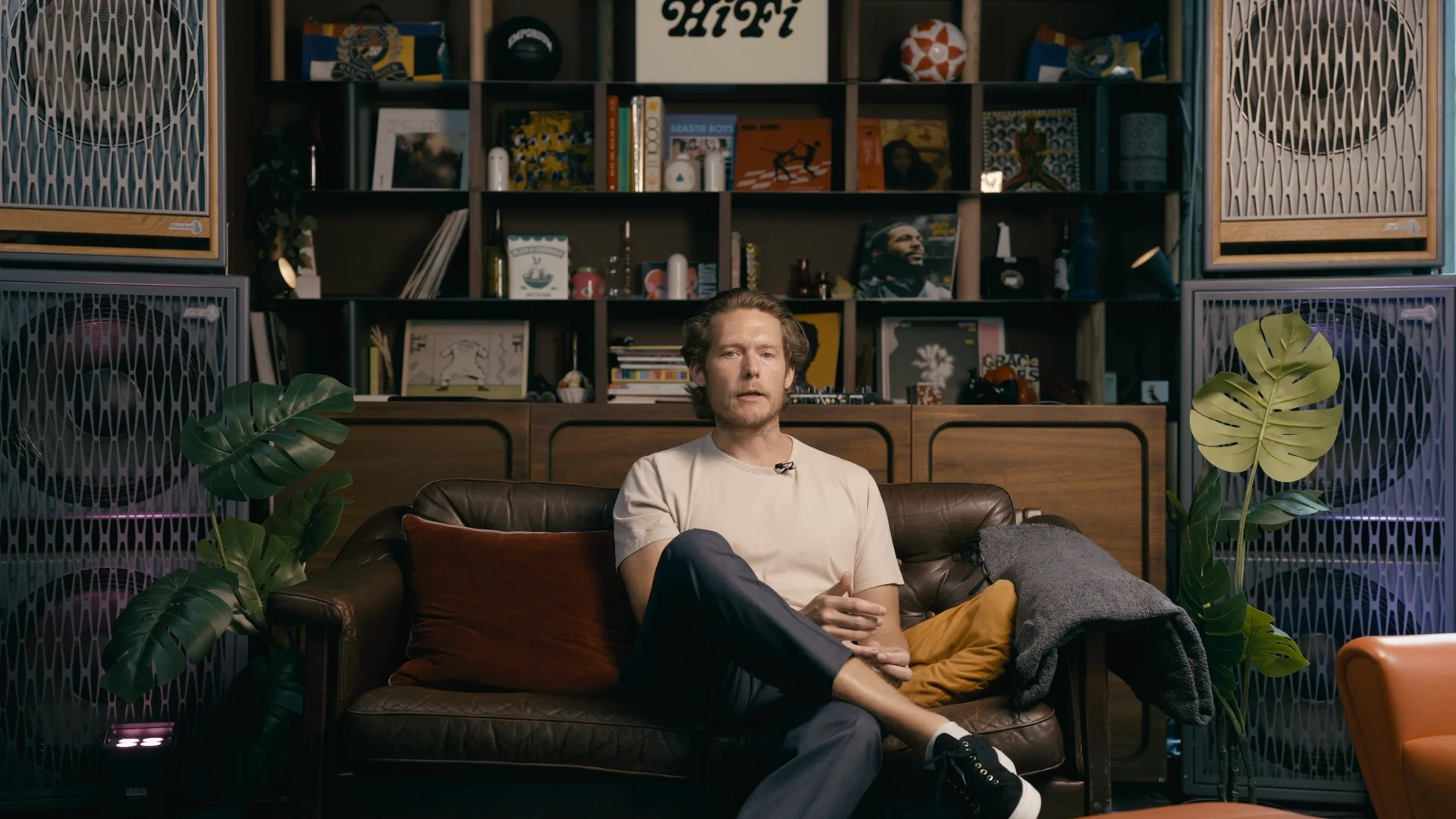
We spoke to Tom Goodwin, futurist, transformation consultant, and tech optimist, to get his reaction to Teamwork.com's report The Sprint to AI.
Tom’s hot take? Winning the AI race is less about speed, and more about pace, strategy, and keeping a cool head. Watch the full interview in the video below, or read on for our 10 key learnings on AI and how it's impacting client work.
Transcript for the video 'Tom Godwin - The Sprint To AI':
Hi, I'm Tom Goodwin. I'm here with teamwork dot com discussing their new report about AI in the workplace. My job is to understand how technology is and isn't changing the world. How is it changing consumer expectations? How is it changing consumer behaviors? How is it changing company cultures? What can we do to make the most of technology to do our jobs better and to bring about more profound and exciting solutions? I work a lot with companies who are interfacing with a whole variety of stakeholders. The main goal really is that people are trying to create products or platforms that help people work in more efficient and effective ways. So I work with a lot of different types of professional services organizations, everything from agencies to designers, architects, construction firms, very different people with very different needs, but many of them will have a client type structure that they need to support. Many of them will need to bring together large groups of people to work on quite complex projects. My general take on AI is it is an amazing canvas of technologies. There's no such thing as AI. It's a kind of broad tapestry of opportunity that comes about by very advanced technologies, some of which we would call AI and some of which are other things. But what happens is together, all of these technologies combine to create this amazing new canvas of opportunities. Now, some of those things might be linked to sort of vision. Some of those things might be linked to sort of algorithmic decisioning. Some of those elements are down to automation. Every time a new technology arrives, there's always a degree of hype. There is this huge sense of optimism. There's this huge sense of naivety. And there's this huge sense of wonder about what might be possible. But it is removed from the day to day realities of most people's jobs. So I think there's a lot of envy. There's a lot of confusion. There's lot of chaos out there where most clients are dabbling with AI. They're sort of using AI in quite a superficial way, driven by this real sense of fear that somehow they're not getting it right. There's this huge sense that people are not doing enough, there's this huge sense that people need to try it faster, There's this huge sense that people need to say yes to everything. Using this sort of impatient approach, we're actually seeing really ineffective uses of AI. And we're starting to lose a focus on what really matters, which is creating solutions that really help our clients. I tend to think the broad canvas of opportunity that comes from AI is extraordinarily exciting and profound. We are on the edge of a sort of paradigm shift in how people work, that we need to be much more ambitious and empathetic and imaginative about how we use this technology. I am just aware that it may take some time and it may find its way in more complicated ways than we think. And there may be many missteps and there may be a degree of disappointment. The curve will last a long time and I think we'll probably see this sort of trough of disillusionment happen quite soon when it becomes apparent that AI is not just a sort of magic wand that you can wave over things and you need to think about the right place to apply it. We'll go beyond the hype into a more sort of considered and sophisticated application of AI in the right places. And as part of that, we'll also start to sort of restructure companies a little, you know, rather than the application of AI to the way that we've done things before, we'll start to think about different ways to do things, to different tools, different processes, different workflows, different structures, and we rethink companies around that. That's probably where we'll see this huge surge of productivity. This idea that the early bird catches the worm, I don't think that's necessarily true. Is this. There's always this sort of very exciting idea in technology that the first companies to use technologies, see enormous leapfrogs in performance. There's almost no evidence to suggest that's true at all. If you look at the largest and most successful companies today in technology, they haven't been first. And there are always companies that have applied the technology at the right time. They've always used it when the technology is good enough. They've used it when it's fast enough, when it's cheap enough. So this idea that you have to be really, really fast in order to win just just simply isn't true. You need to operate at the right time. It takes a long time for technology to really be digested, and we can find the sort of little parts of the process that can be improved with technology. That's actually a very, very bad way to improve a product. Know, rather than to apply it where it's easiest to apply or it's quickest to apply or where it's politically more easy to apply, we need to take a bit of a step back and apply it in a much more profound and central and core way. The world won't be changed by automatically writing emails or automatically writing pictures. The world will be changed by entire new workflows and entire new ways of doing things and entire new incentive structures, new business models. That's where we'll see the companies really leapfrog in how they perform. We need to be really, really careful at the moment. I've never seen people more fearful about a new technology. There is this huge sense of anxiety that a computer will do their job. Companies need to go through a process where they're bringing their staff with them. And there's an element of reassurance, and there's an element of clarity around vision. The very easiest way to apply a technology is to look at the things you've done before and to do them easier or faster. And therefore, lot of leaders, I think, are looking at this technology as a way to do things more cheaply and essentially to get rid of people. I think we need to go through a process where we're much more ambitious. And rather than thinking about faster or easier or cheaper, we're thinking about better. So how can this technology or this group of technologies enable us all to do our jobs in a much better way? How can we add more value? How can we be more thoughtful? How can we use our instinct? How can we drive our imagination? We need to create a construct where we're automating what is quite mundane and boring, and we're freeing up people to be the best human they can be. And that involves unleashing their imagination, leveraging the wonder that is being a human being today. I think the biggest mind shift that is happening in companies is actually to be a little bit more relaxed about this. I think there's this unbelievable sense that companies need to show to each other that they're on top of this. So what we're seeing is unbelievably rapid, unbelievably superficial, and often quite stupid innovation around AI in a really ineffective way. So I think there needs to be the confidence to say to the world, we get this. We know it's going to be extremely profound, but let's do this properly. I mean, everything I see done with AI today in terms of numbers is quite stupid. I mean, it's as if we've taken every single text entry box and we put a little magic one there. We've used the icon, the kind of sparkle logo, as a way to sort of like add magic to every part of the process. It's actually quite sort of laughable when you look at quite how superficial and thin these applications are. You know, it's almost like every sort of product manager has been tasked with finding a way to put AI in as many places as possible that doesn't actually involve any core writing of code or it doesn't actually involve any integration with other systems. So what we see are these really sort of facile and really unhelpful and really clumsy adoption of AI into parts of a process that as a consumer mean nothing. One is we need the calmness. Two is we need more ambition. And three, and this is the most important thing, is we need to work around the wishes of our customers. Not that many people want to render out a movie. A lot of people want to render out an invoice. Not a lot of people want to automate the production of music, but a lot of people want their expenses to be done more quickly. Ultimately, it means doing the things that people really want to have done rather than the stuff that's easiest to code. For a long time in my work, I've been focusing on the degree to which companies are made up of well intentioned decisions that over time become more complicated and processes that become calcified. I've always used kind of architecture almost as the example where it's as if a kind of building with an old foundation is slowly added to and you get clutches and workarounds and tarpaulin and duct tape. Over time processes get more complicated, people find workarounds, people don't really understand how systems work and we have these kind of Frankenstein solutions where people know that they work and they don't know how. For me, this is a really clear opportunity in the world right now is to use AI as the excuse to look at this technical debt and to look at this level of duplication and to look at these really old processes and incredibly old software. And rather than to continually maintain those problems, you get the business case to build something new that's best in class, that's so exciting and powerful that you actually change the way that your company works around it. I think a lot of people think that really advanced forms of technology can kind of make amends for their structure. I think it acts the opposite way, actually. I think technology is a lever. Like it tends to sort of exaggerate what we already have. So if you have an unbelievably well formed company, technology will amplify that to make it extraordinarily brilliant. If you have a company with the wrong tools, with the wrong structure, with the wrong foundations in place, all that will happen is we'll simply get to a worse place faster. It will exaggerate and it will amplify all of the faults within that current entity. The solution to this really is to go through a process where you take a few steps back. You know, you figure out what foundations you need, you figure out what vision you need, you figure out why your company exists, and then you proactively create a company around best in class software to deliver against that vision.
1. There’s no such thing as ‘AI’
Wait, what? Tom contextualises that: “...per se. The umbrella term of ‘AI’ is a catch all for an unbelievably vague collection of technologies, spanning generative tech but also includes things like really advanced automation and algorithmic decision-making. It’s not just one tangible thing.”
“AI is a broad tapestry of tools that together offers a new canvas of opportunity. Whether that’s accelerating what you’re already doing, or enabling new visions to come to life, it means a totally different way of doing things. And for that reason, I feel we are absolutely on the edge of a paradigm shift in how people work. So we need to be much, much more ambitious, empathetic, and imaginative about how we use it.”
)
2. AI is not a magic wand
Tom says, “I have quite a nuanced view about AI. Yes, it’s extraordinarily exciting. But at the same time, it’s going to take time to figure out, there will be missteps, and with that comes a degree of disappointment. We'll probably see a trough of disillusionment when people realise AI isn’t a magic wand for any and all problems — something the Teamwork.com report points out in the context of Frankenstacks.”
“A lot of people think that AI can compensate for an otherwise shaky business structure or legacy tech failings. I think the opposite is true. Technology is a multiplying force — it tends to exaggerate things. If you have an unbelievably well-formed company with smart people doing the right jobs in the right ways with the right tools, the right data, technology will amplify that to make it extraordinarily brilliant. But if you have a company with the wrong tools with the wrong structure with the wrong foundations you’ll simply get to a worse place, faster."
3. The early bird doesn’t always get the worm
Tom admits he used to be obsessed with this idea that everything was going to happen quickly. “The reality is that change tends to happen quite slowly. Institutions take time, regulations matter, and humans are quite risk averse. So I've really readjusted how quickly I expect things to change.”
In the race to AI, the real winners will be those who go at the right pace. He continues: “The idea that early adopters automatically get this huge headstart and leapfrog others isn’t always the case. If you look at the biggest, most successful tech companies today, they usually haven’t been ‘first’. They’re the ones that made moves at the right time — when the technology was good enough, fast enough, cheap enough, or when teething problems were resolved. This concept that you have to go really fast in order to win simply isn’t true”.
4. Don’t lose your head amid all the hype
“There's this unbelievable sense of pressure that companies need to show each other, and clients, and the trade media, and stakeholders, and the financial markets that they're on top of AI.” Tom says. “And what we’re seeing as a result is unbelievably rapid but superficial — in fact sometimes quite stupid innovation — around AI.”
He continues, “We need to have the confidence to say to the world, ‘We get this. We know it's going to be extremely profound. But let's do this properly.’ And doing it properly means figuring out what AI truly means for your business model. For your clients. For your long-term vision. For security risks, legal risks, regulatory risks, and creating a really mature and sensible and incredibly ambitious culture that brings people within an organization together. Done right, we really will see extraordinary value from AI. But that takes a lot of confidence and calmness at a time where it's incredibly difficult to behave that way."
)
5. Start by stepping back
Tom notes “Typically businesses start in the wrong place. Often they look for a quick fix to broken systems and messy structures and hope that if we add enough layers of technology horsepower it will make sense of it.
A better approach is to take a few steps back. Figure out what foundations you need, where you want to be headed, why your company exists, and then start building around best-in-class software to deliver that vision. By far the most important question is what are we actually try to achieve here? But unfortunately, when new and exciting tech arrives on the scene, that process can seem quite boring compared to just getting stuck in and seeing if it can solve your more straightforward problems."
6. The opportunity cost of workarounds
“Poor technology isn't just miserable to work with — as the report shows, it actually loses you money” Tom points out. “We're really starting to see company leaders realize this, and recognize that technology is more than just a cost centre. But within that, a big challenge is that companies are operating with too many point solutions, and relying on people to be the glue that sticks those systems together.
The advent of AI is a confronting moment, because it’s forcing businesses to really look at this technical debt and the dysfunctional processes and workarounds that we’ve just come to accept as the norm. It’s an opportunity to replace incredibly old software with something new and best-in-class. Something that’s so powerful that you actually change the way that your company works around it. But that means not falling into the trap of using AI to create even more layers of workarounds, and instead unpick what’s causing them in the first place."
7. All that sparkles is not gold
“In the early days of a big technology breakthrough like AI, it’s typically applied in the easiest, fastest ways possible. But that’s actually a very bad way to improve a product and it doesn’t really offer anything transformative for the user. Surprisingly, it’s the smaller things that make a big difference. Dictation software. The ability to search within Apple photos for people, plants, or business cards.
Often the most dramatically helpful applications of AI are not the ones that appear to be sophisticated, but they appear to just make your normal life a little bit more easy. I think one of the most interesting things for me in the Teamwork.com report was just the idea that we can have more ambitious solutions that span many different tasks. As a consumer, you should be looking for technology that applies AI more meaningfully, in a profound and core way. That’s where we’ll see companies really leapfrog in how they perform."
8. Honesty is the best AI policy
“The AI transparency gap that Teamwork.com has identified is very real right now. On the one hand, clients want you to use AI to be faster and leaner. But it’s a bit of a Trojan horse, because it also makes people more demanding — and query your fees more. When it comes to transparency around AI use, my view is that honesty is the best way forward.
Position your AI use as something that allows your brilliant workforce to be even more brilliant. So rather than doubling down on the level of automation or the speed at which things can be done, companies should focus on the fact that they can now serve people better. Focus less on the AI as being the point of difference and more the fact that it happens to enable you to produce even better work — whether that's outputs, reporting, responsiveness, or compliance."
9. When it comes to AI in client work, focus on value
"We’re still in the early days of AI and when people don't know about something there's a huge risk they think it’s doing more work than it really is. So, if you're being asked to reduce your fees because of your use of AI you need to go in on the front foot, and focus on the value of the outputs you’re delivering.
The reality of a lawyer's job isn’t that they spend all day writing contracts. It's that they spend all day understanding the mentality of the judge, how to make a creative case, and how to lubricate relationships to find out more. The same can be said for working on complex projects, or with clients. The more that we celebrate what AI can do, often what we're really showing is that we don't understand how certain jobs work."
10. You’ll know AI is working when you’re not talking about it
Tom concludes: “There's a weird thing that happens with technology, which is when it really gets good, we tend to not notice it. We don't notice cell phone reception, except when we don't have it. We don't notice how much phone battery life has improved, unless it goes. I think the true sign that an AI application is here is that people just talk about products working really well rather than it being ‘AI powered’.”
“If I had to talk about a sort of defining characteristic for the next few years, I think it would be automation, making things automatically happen for us and increasing our ability to do more with less. For me the ultimate role of any software is to move away from being a specialized and deep point solution and to become something much more like an operating system. One that does things at a kind of task or a job level, rather than doing specific things it does everything and it orchestrates stuff together.”
)
)
)
)
)
)
)
)